Wisdom teeth removal with a plan made for you
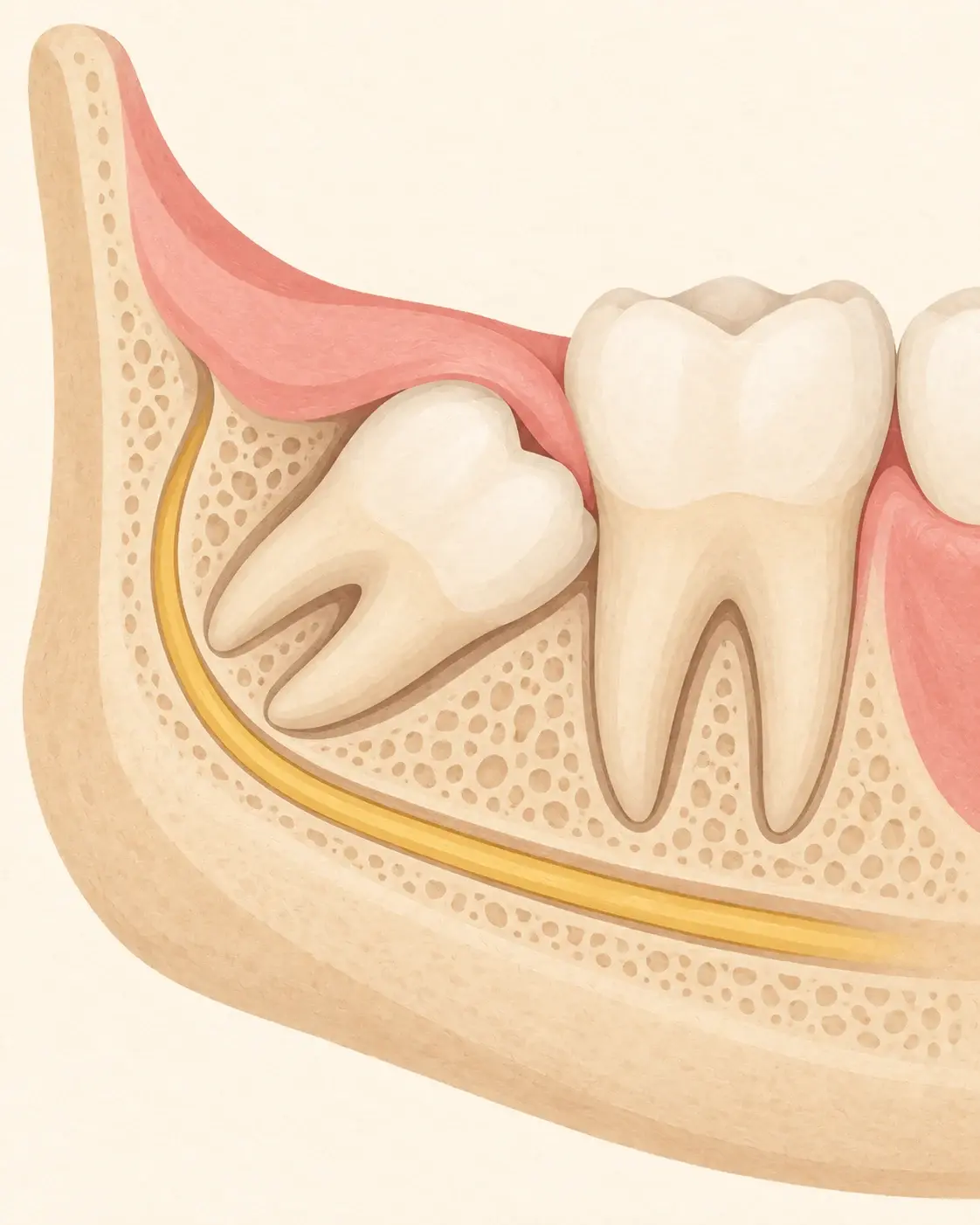
Wisdom teeth are the last molars to develop. When there is not enough room for them to come in normally, they may remain partly or completely trapped beneath the gum or bone.
An evaluation helps us understand their position, how they affect nearby teeth and tissue, and whether removal or continued monitoring is the better choice.
Why evaluation matters
Pain is not the only sign of a problem
Wisdom teeth can be difficult to clean and may affect nearby structures even before symptoms become obvious. Imaging helps reveal what cannot be seen during a routine mouth examination.
Impaction and limited space
A wisdom tooth may grow at an angle, remain beneath the gum, or have too little room to erupt into a useful position.
Changes around nearby teeth
Food and bacteria can collect at the back of the mouth, contributing to decay, gum inflammation, infection, or damage to the neighboring molar.
Remove or monitor
Not every wisdom tooth requires surgery. Healthy teeth that can be cleaned and examined may sometimes be watched with regular visits and imaging.
What to expect
From evaluation through recovery
The details depend on the number, position, and development of your wisdom teeth.
- 01
Examination and imaging
We review your symptoms and health history, examine the area, and use imaging to evaluate the roots, surrounding bone, nearby teeth, nerves, and sinuses.
- 02
Removal and anesthesia
Your anesthesia plan is selected for your needs. Depending on the tooth, the surgeon may open the gum, remove a small amount of bone, or divide the tooth into sections for controlled removal.
- 03
Healing at home
Swelling, tenderness, and a temporary change in diet are common. Written instructions explain how to protect the blood clot, clean your mouth, use medications, and recognize concerns.
Preparing for your visit
A safer appointment begins with good information
Tell us about your medications, allergies, health conditions, previous anesthesia experiences, and any recent illness. We will give you instructions based on the anesthesia planned for your procedure.
- Bring an up-to-date medication and health history
- Follow the provided eating and drinking instructions exactly
- Arrange a responsible adult escort if sedation is planned
- Plan time for rest and a soft-food diet after surgery
- Call the office if you become ill before your appointment
Questions and answers
What patients often ask
Does everyone need all four wisdom teeth removed?
No. Recommendations are based on each tooth’s position, health, ability to stay clean, and risk to nearby structures. Some patients benefit from removing all four at once, while others may need fewer removed or may be monitored.
Do wisdom teeth need to hurt before they are removed?
No. Decay, gum disease, cysts, or damage to a neighboring tooth can develop without pain. Regular examinations and imaging help identify changes before they become more difficult to manage.
What is a dry socket?
A dry socket can occur when the protective blood clot at an extraction site is lost or breaks down before healing has progressed. Increasing pain, a bad taste, or pain that travels toward the ear should be reported to the office.
How long does recovery take?
Many people return gradually to normal activities over several days, but swelling, diet, and healing vary with the complexity of surgery and the individual. The extraction sites continue healing after you feel better.
What are the possible risks?
Possible complications include bleeding, infection, dry socket, delayed healing, sinus-related concerns, and temporary or persistent changes in feeling when lower teeth are close to sensory nerves. Your individual risks will be reviewed before surgery.
Start with a conversation
Understand your options and next steps
An individual evaluation is the best way to understand what applies to you, what alternatives are available, and what recovery may involve.
This information is educational and does not replace an individual examination, diagnosis, or medical advice. Treatment recommendations, risks, healing, and results vary by patient.