Dental implants: a strong foundation for a renewed smile
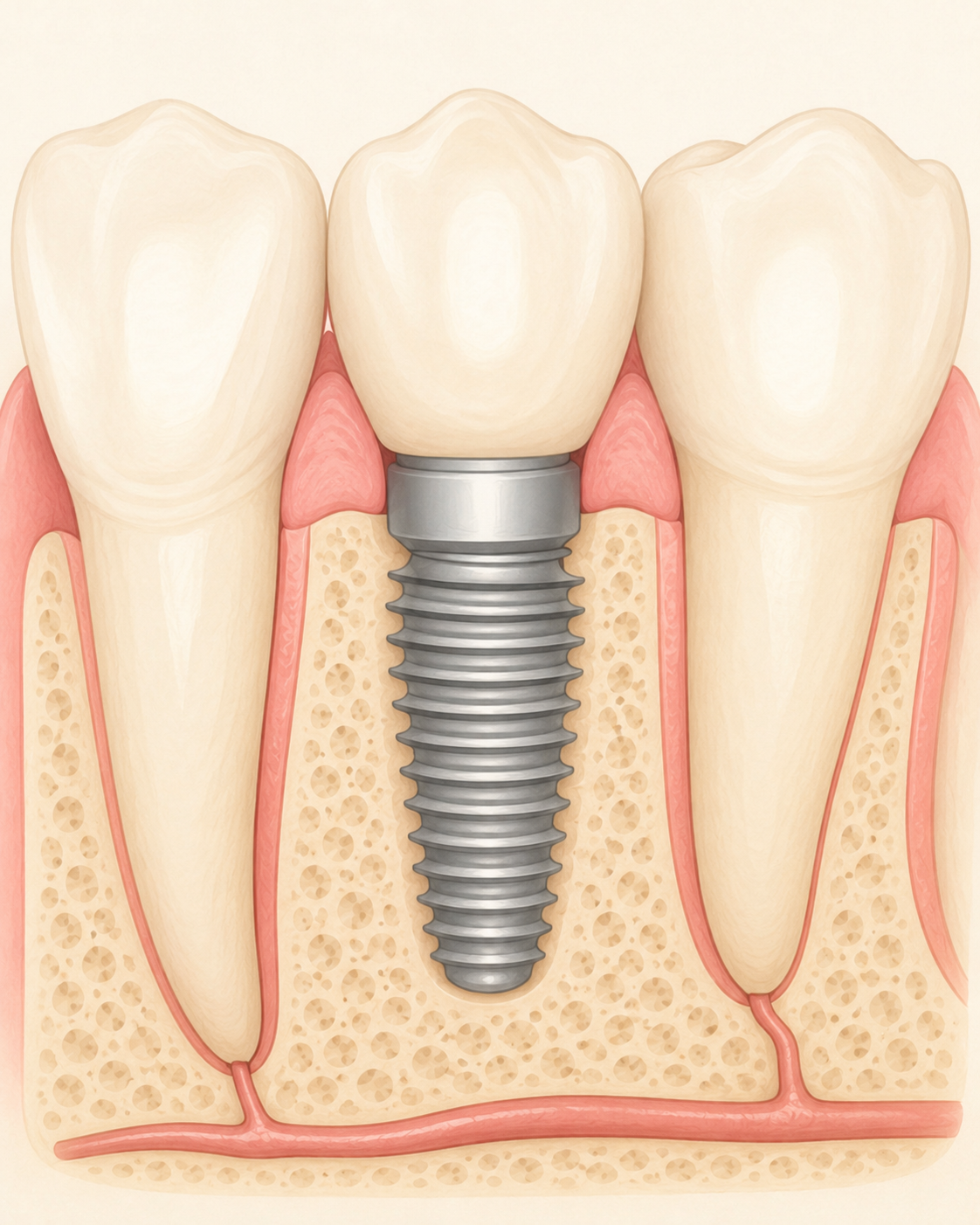
Missing a tooth can change how you eat, speak, and feel about your smile. A dental implant replaces the missing tooth’s root with a small post in the jaw, creating stable support for a custom-made replacement tooth.
Whether you need to replace one tooth, several teeth, or support a full arch, we begin with a careful evaluation and a plan shaped around your health, anatomy, and goals.
Why patients consider implants
Built to become part of your smile
The implant is the portion you do not see. It acts as an anchor in the jaw while the crown, bridge, or denture restores the visible teeth above the gumline.
Designed for everyday function
An implant-supported tooth is made to feel stable while you eat, speak, and smile. Your final restoration is shaped and shaded to complement the teeth around it.
Support where a tooth is missing
Because an implant sits within the jaw, it can help maintain bone at the replacement site and does not require neighboring healthy teeth to support it.
Made for long-term care
With good home care and regular dental visits, implants can provide durable support for a crown, bridge, or denture for many years.
One approach, several possibilities
Treatment shaped around what you need
One missing tooth
A single implant can support an individual crown without using the teeth on either side as anchors.
Several missing teeth
Two or more implants may support a bridge, replacing multiple teeth while limiting the need for a removable appliance.
A full arch of teeth
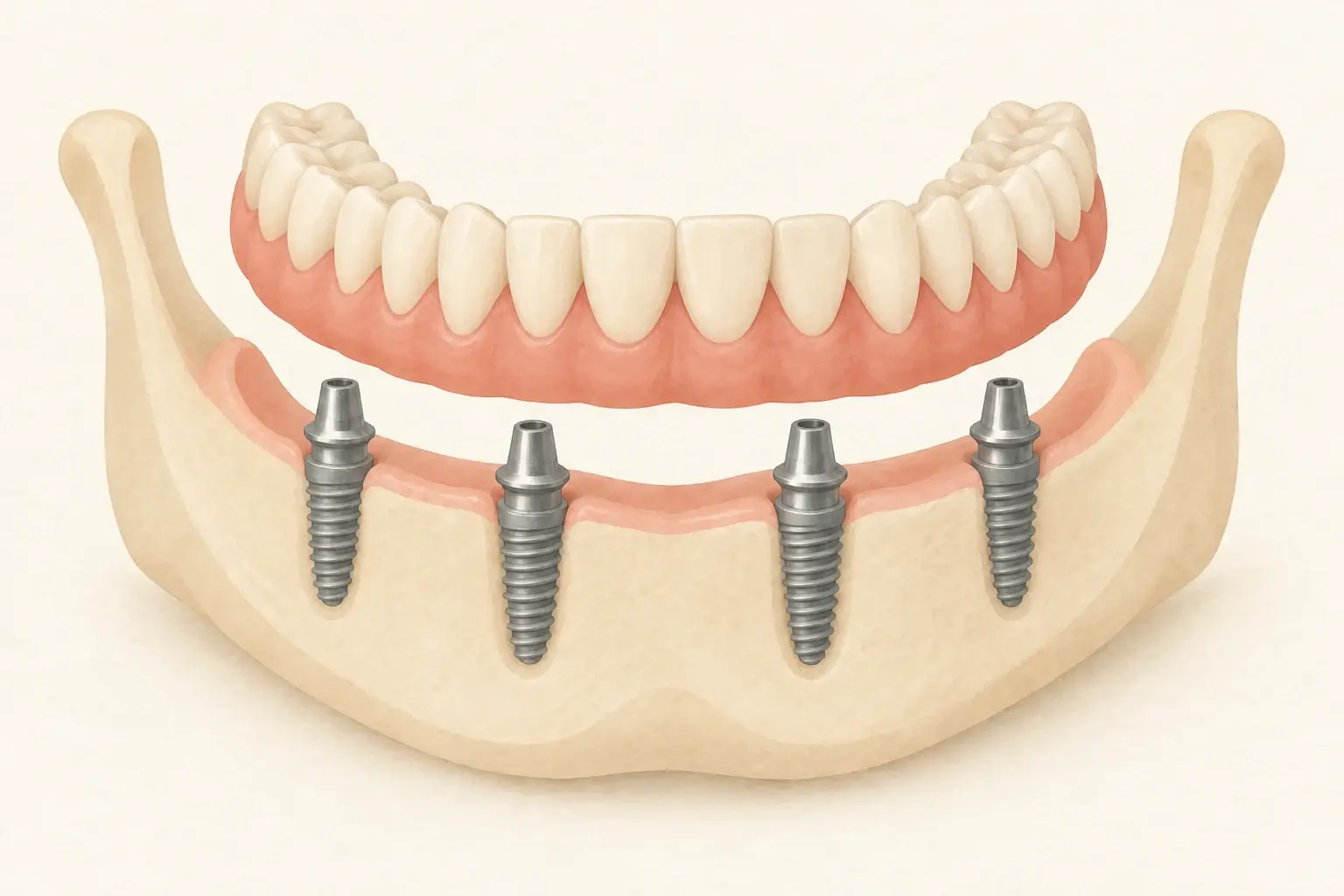
A carefully planned group of implants may support or stabilize a full-arch restoration. Fixed and removable designs may be considered.
Your implant journey
Thoughtful care, one step at a time
Every timeline is different, but implant treatment generally moves through three stages.
Consultation and planning
We review your health history, examine your mouth, and evaluate imaging to understand the available bone and nearby anatomy. Your plan may include an extraction or bone graft before implant placement.
Implant placement and healing
The implant is placed in the jaw during a surgical appointment. Over the following weeks or months, the surrounding bone heals around it in a process called osseointegration.
Your final restoration
Once the implant is ready, your restorative dentist creates the crown, bridge, or denture that attaches to it. Timing and the use of a temporary tooth vary from person to person.
Your treatment plan and timing are tailored to you.
Is an implant right for you?
It starts with the whole picture
Age alone does not determine whether someone can receive an implant. We look at your oral health, medical history, medications, available bone, and the health of your gums before recommending treatment.
Your visit may include:
- A review of your dental goals and health history
- An examination of the teeth, gums, bite, and implant site
- Imaging to assess bone and nearby anatomical structures
- A discussion of alternatives, timing, anesthesia, risks, and recovery
- Coordination with your restorative dentist when appropriate
Questions and answers
What patients often ask
Will dental implant surgery hurt?
Anesthesia is used during implant placement, and sedation may be available depending on your procedure, health history, and preferences. Some soreness, swelling, or bruising can occur afterward. We will give you personalized instructions for managing discomfort and tell you when to contact the office.
How long does the process take?
Treatment often takes several months because the implant needs time to become stable in the jawbone. The exact schedule depends on healing, the number and location of implants, and whether an extraction or bone graft is needed. In selected cases, a temporary tooth may be placed earlier.
Will my new tooth look natural?
The visible tooth is a custom restoration made by your restorative dentist. Its shape, size, and shade are planned to blend with your smile. The implant itself sits beneath the gum and acts as the supporting foundation.
Am I a candidate for dental implants?
Many adults with one or more missing teeth may be candidates. Healthy gums, adequate bone, general health, tobacco use, medications, and your ability to keep the area clean all influence treatment planning. A consultation and imaging are needed to determine what is appropriate for you.
What are the risks?
As with any surgery, possible complications include infection, bleeding, delayed healing, implant failure, and injury or irritation involving nearby teeth, nerves, or sinus structures. Your individual risks and alternatives will be reviewed before treatment.
How do I care for an implant?
Implants still require daily brushing, cleaning between the teeth, and professional dental care. Avoiding tobacco and following the maintenance schedule recommended by your dental team can support the health of the gum and bone around the implant.
Ready to learn what is possible?
Let’s talk about a plan made for you
A consultation is the best way to understand your options, the steps involved, and the treatment timeline for your needs.
This information is educational and does not replace an individual examination, diagnosis, or medical advice. Treatment recommendations, risks, healing, and results vary by patient.