Careful tooth removal with the next step in mind
When a tooth cannot be predictably repaired, removing it may relieve infection, protect neighboring tissue, or make room for another phase of treatment.
Our goal is not simply to remove a tooth. We plan the procedure around your comfort, your health, the surrounding bone, and any future tooth-replacement needs.
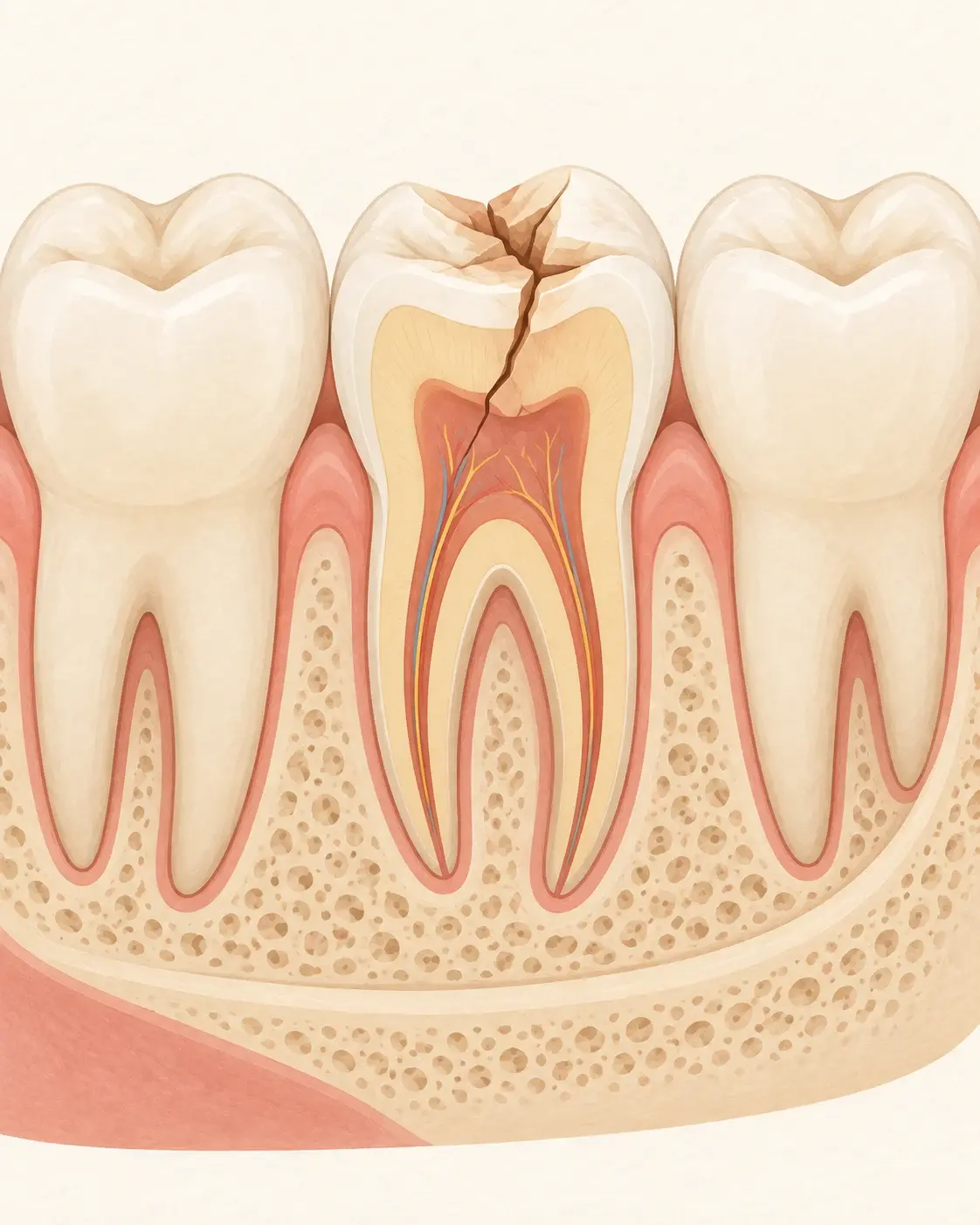
Reasons for extraction
When saving a tooth is no longer predictable
Your dentist and surgeon consider the condition of the tooth, the surrounding bone and gum, your symptoms, and available alternatives before recommending removal.
Severe damage or decay
A deep crack, fracture, or decay below the gumline may leave too little healthy tooth structure for a dependable restoration.
Infection or bone loss
A tooth may need removal when infection cannot be resolved or when advanced gum disease has weakened its support.
Treatment planning
Extractions may also be part of orthodontic treatment, preparation for a prosthesis, or a plan to replace the tooth with an implant or bridge.
What to expect
A procedure designed around the tooth
Some teeth can be removed simply; others require a surgical approach because of their position, roots, or condition.
- 01
Evaluate and plan
We review imaging and your medical history, assess the tooth and surrounding structures, and discuss anesthesia, alternatives, and whether bone preservation or tooth replacement should be considered.
- 02
Remove the tooth
The area is anesthetized. A simple extraction loosens and removes an accessible tooth; a surgical extraction may require an incision, limited bone removal, or dividing the tooth into sections.
- 03
Protect the site
A blood clot forms and begins the healing process. We provide instructions for bleeding control, diet, oral hygiene, activity, and any prescribed or recommended medication.
Planning beyond the extraction
Consider what happens after the tooth is gone
Except for some wisdom teeth, an empty space can affect chewing, neighboring teeth, and the jawbone. Replacement is not always immediate, but discussing options early can preserve future choices.
- Whether the tooth might still be restored
- Simple extraction versus surgical extraction
- Socket preservation or another bone-grafting approach
- Timing for an implant, bridge, partial denture, or other option
- Your recovery needs, medications, and anesthesia plan
Questions and answers
What patients often ask
What is the difference between a simple and surgical extraction?
A simple extraction removes a tooth that can be accessed above the gumline. A surgical extraction may be needed when a tooth is broken, impacted, covered by tissue or bone, or has roots that require a more controlled approach.
Will I need stitches?
Stitches are sometimes used after a surgical extraction or graft but are not needed for every tooth. We will explain whether yours dissolve on their own or require a follow-up visit.
How long will bleeding continue?
Light oozing can occur during the first day. Firm pressure with gauze and following your instructions usually helps. Contact the office for bleeding that is heavy, persistent, or difficult to control.
When can I eat normally again?
Begin with the foods recommended in your instructions and advance as comfort allows. Avoid chewing directly on the site and avoid straws, smoking, vaping, and foods that may disrupt or irritate the healing area.
Do I need to replace the extracted tooth?
It depends on the tooth, your bite, and your overall treatment plan. We can coordinate with your restorative dentist to discuss implants, bridges, removable options, or situations where replacement may not be necessary.
Start with a conversation
Understand your options and next steps
An individual evaluation is the best way to understand what applies to you, what alternatives are available, and what recovery may involve.
This information is educational and does not replace an individual examination, diagnosis, or medical advice. Treatment recommendations, risks, healing, and results vary by patient.