Bringing the jaws and bite into better balance
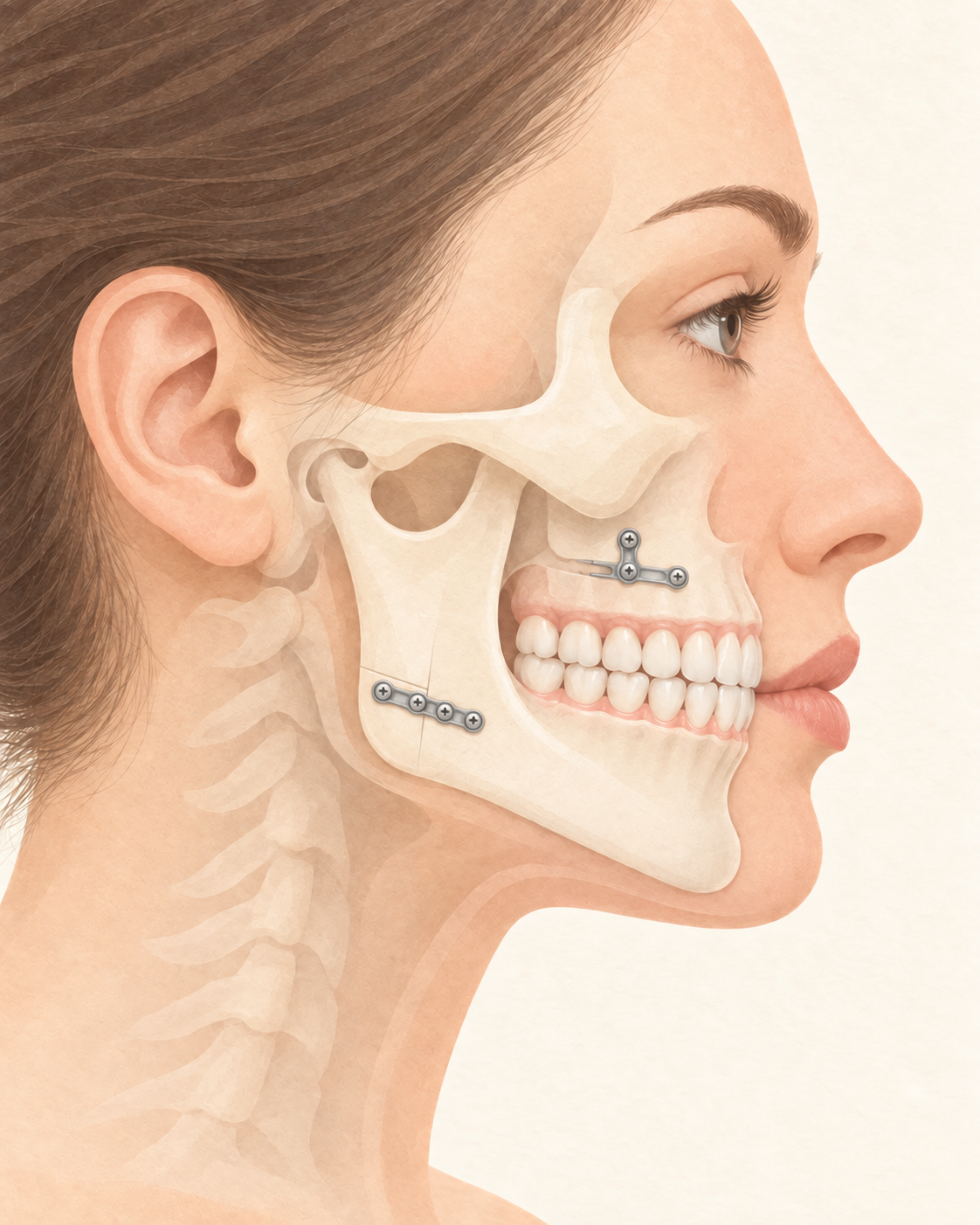
Corrective jaw surgery, also called orthognathic surgery, repositions the upper jaw, lower jaw, chin, or a combination of these structures when the jaws do not meet or function properly.
Treatment is planned around function first—including chewing, speech, breathing, and long-term bite stability—while also considering facial balance and your individual goals.
Why jaw surgery may be considered
When the problem involves the jaws—not only the teeth
Orthodontics can move teeth, but it cannot fully correct every difference in jaw size or position. An oral surgeon and orthodontist work together to decide whether combined treatment may improve function.
Bite and chewing
A large overbite, underbite, open bite, or crossbite related to jaw position may make biting and chewing less efficient.
Speech, swallowing, or breathing
Jaw relationships can influence how the lips close, how the tongue functions, and—in selected cases—the size and shape of the airway.
Facial balance and stability
Repositioning the jaws can improve skeletal balance while establishing a bite designed for long-term function.
A coordinated treatment
Orthodontics, surgical planning, and recovery
Corrective jaw treatment is a process rather than a single appointment and often spans many months.
- 01
Team planning
Your surgeon and orthodontist evaluate the bite, facial proportions, imaging, models, and goals. Orthodontic treatment commonly positions the teeth for the bite planned after surgery.
- 02
Surgical repositioning
Under general anesthesia, the planned jaw segments are repositioned and stabilized with small plates and screws. Incisions are often inside the mouth, though each operation is different.
- 03
Healing and finishing
A modified diet, swelling management, oral hygiene, and follow-up are important early on. Orthodontic treatment typically continues as the bite settles and the jaws heal.
Planning the whole journey
Clear expectations are part of treatment
We discuss the proposed movements, hospitalization or surgical setting, anesthesia, diet, time away from usual activities, orthodontic coordination, and the changes you can realistically expect.
- Three-dimensional imaging and virtual surgical planning
- Orthodontic preparation before and after surgery
- Which jaw or jaws may need repositioning
- Nutrition, oral hygiene, and activity during recovery
- Expected swelling, numbness, healing, and follow-up
Questions and answers
What patients often ask
How do I know if I need jaw surgery or only braces?
Braces can correct many problems caused by tooth position. Surgery may be considered when the underlying jaw bones are significantly out of balance. An orthodontist and oral surgeon usually make this assessment together.
Will there be visible scars?
Many orthognathic procedures use incisions inside the mouth. Some treatment plans require small external incisions, and your surgeon will explain their location and expected appearance.
How long is the full treatment process?
The combined orthodontic and surgical process may take many months or longer. Initial surgical recovery is much shorter than the complete treatment timeline, and bone healing continues for months.
When can I return to work or school?
Timing varies with the operation, swelling, energy level, and the demands of your daily routine. Many patients need multiple weeks away, but your team will provide guidance based on your procedure and progress.
What are the possible risks?
Risks may include bleeding, infection, bite changes, delayed bone healing, relapse, hardware concerns, jaw-joint symptoms, and temporary or persistent changes in sensation. Procedure-specific risks are reviewed in detail before surgery.
Start with a conversation
Understand your options and next steps
An individual evaluation is the best way to understand what applies to you, what alternatives are available, and what recovery may involve.
This information is educational and does not replace an individual examination, diagnosis, or medical advice. Treatment recommendations, risks, healing, and results vary by patient.