Rebuilding support for your next stage of care
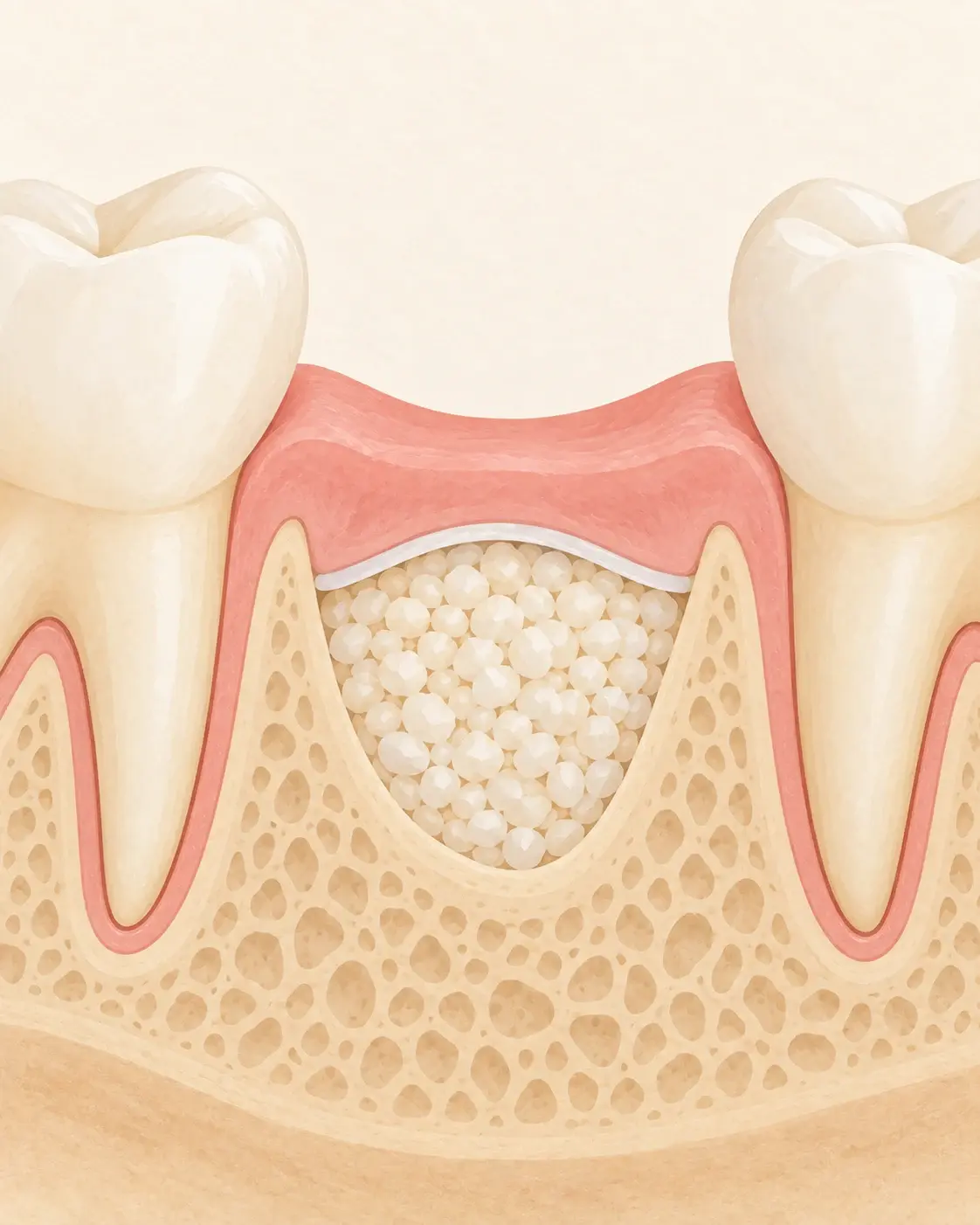
The jawbone can become thinner after tooth loss, infection, trauma, or other changes. Bone grafting adds material to an area that needs more volume or support.
The graft acts as a framework for healing. Over time, your body may replace or integrate the material with newly formed bone, depending on the procedure and material used.
Why grafting may be recommended
Creating the foundation treatment needs
Bone grafts vary in size and purpose. Some preserve a socket after extraction, while others rebuild a ridge or sinus area before implant placement or reconstruct bone after disease or injury.
Preserve an extraction site
Graft material may be placed when a tooth is removed to help limit changes in the ridge and preserve future restorative options.
Prepare for an implant
When bone is too narrow, short, or irregular for predictable implant placement, grafting may help create adequate support.
Restore lost structure
Grafting may also be part of reconstruction after infection, cyst removal, facial injury, or another condition affecting the jaws.
What to expect
A plan based on the size and location of the defect
Your procedure may be performed at the same time as another surgery or as a separate stage that heals before the next treatment.
- 01
Measure the site
Clinical examination and imaging help us understand the shape of the bone, nearby teeth, nerves, and sinuses, and the amount of reconstruction needed.
- 02
Place and protect the graft
Graft material is positioned at the prepared site. A membrane, small fixation device, or your own tissue may be used to help stabilize and protect the area during early healing.
- 03
Allow new bone to develop
Healing commonly takes months. Follow-up visits and imaging help determine how the area is maturing and when it may be ready for an implant or the next phase of care.
Graft materials and timing
The approach is selected for your anatomy
Graft material may come from your own body, a screened human or animal donor source, or a manufactured material. The best choice depends on the location, size, purpose, and your health history.
- Socket preservation at the time of extraction
- Ridge augmentation for width or height
- Sinus augmentation in the upper back jaw
- Whether the implant can be placed at the same visit
- Expected healing time and follow-up imaging
Questions and answers
What patients often ask
Will I always need a graft before an implant?
No. Some sites have adequate healthy bone for implant placement without grafting. Examination and three-dimensional imaging, when indicated, help determine whether additional bone is needed.
Where does graft material come from?
Depending on the procedure, material may come from your own bone, a carefully processed donor source, an animal-derived source, or a synthetic material. We will explain the recommended material and alternatives before treatment.
How long does a bone graft take to heal?
Healing time varies with the size and location of the graft, the material used, and individual health factors. Many grafts need several months before the site is reassessed for the next phase of care.
What can affect graft healing?
Tobacco and nicotine use, uncontrolled medical conditions, infection, pressure on the site, and difficulty following aftercare can interfere with healing. Tell us about medications and health changes before surgery.
What are the possible risks?
Risks may include infection, bleeding, wound opening, loss or exposure of graft material, delayed healing, and the possibility that additional grafting is needed. Location-specific risks will be reviewed with you.
Start with a conversation
Understand your options and next steps
An individual evaluation is the best way to understand what applies to you, what alternatives are available, and what recovery may involve.
This information is educational and does not replace an individual examination, diagnosis, or medical advice. Treatment recommendations, risks, healing, and results vary by patient.